
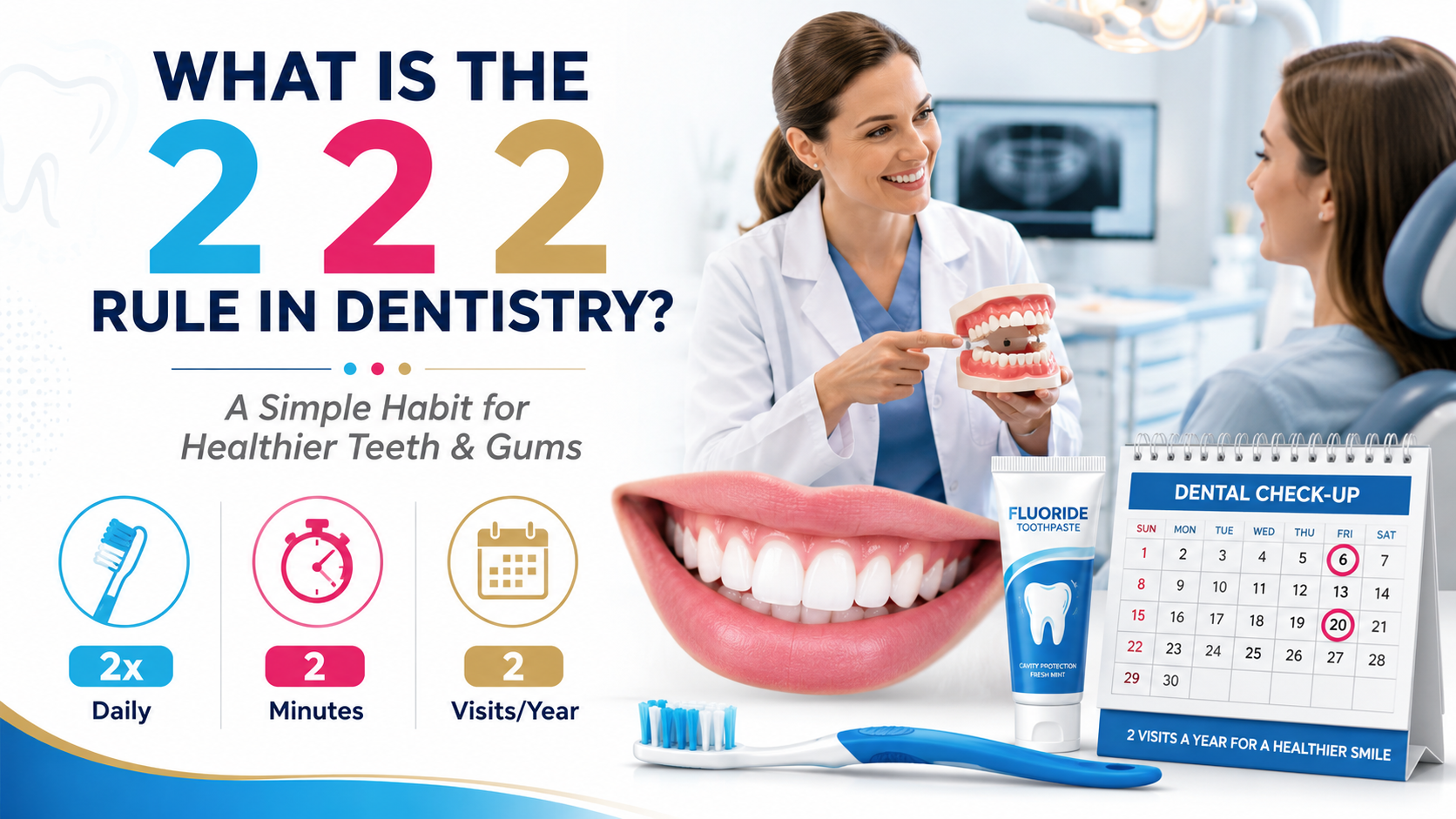
What Is the 2 2 2 Rule in Dentistry?
Maintaining good oral health does not have to be complicated. Dentists often recommend simple habits that patients can easily follow every day. One such guideline is the 2 2 2 rule in dentistry, a straightforward approach designed to promote healthy teeth and gums while preventing common dental problems.
The 2 2 2 rule serves as a reminder for proper oral hygiene and regular dental care. By following this rule consistently, individuals can significantly reduce their risk of tooth decay, gum disease, bad breath, and other oral health concerns.
In this article, we will explain what the 2 2 2 rule in dentistry means, why it is important, its benefits, and how you can incorporate it into your daily routine for a healthier smile.
What Does the 2 2 2 Rule in Dentistry Mean?
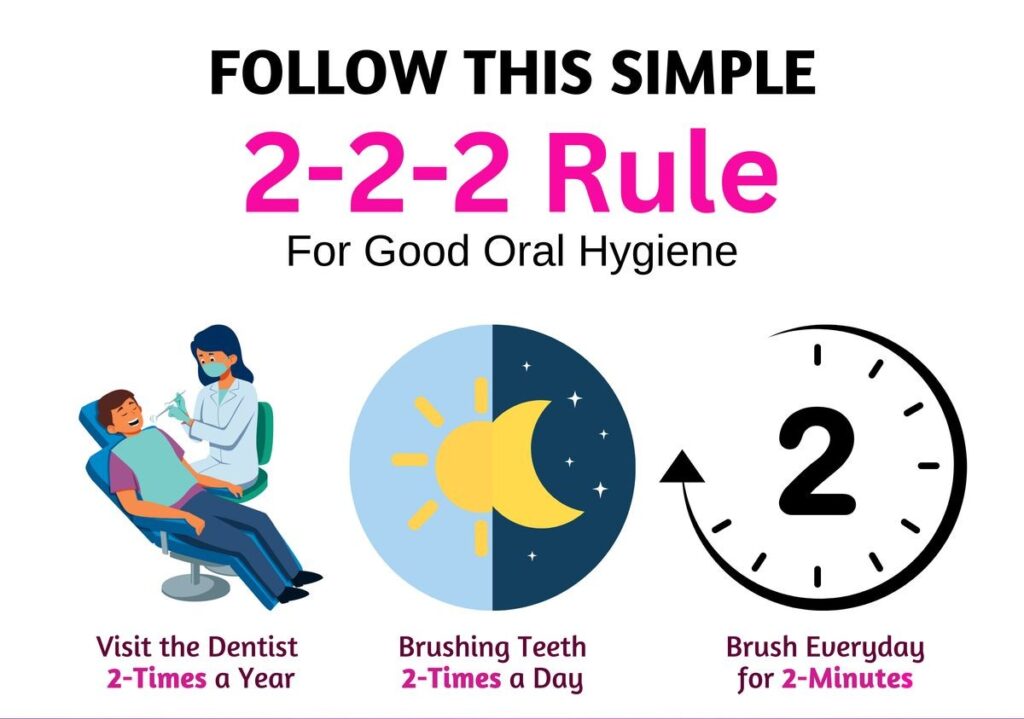
The 2 2 2 rule in dentistry is a simple guideline that encourages people to:
- Brush their teeth 2 times a day
- Brush for 2 minutes each time
- Visit the dentist 2 times a year
These three simple practices form the foundation of effective oral healthcare. While they may seem basic, following them consistently can have a significant impact on your dental health over time.
The rule is particularly helpful for children, teenagers, and adults because it provides an easy-to-remember framework for maintaining healthy teeth and gums.
Why Was the 2 2 2 Rule Created?
Many dental problems develop gradually due to poor oral hygiene habits or irregular dental visits. Dentists created the 2 2 2 rule to simplify oral care recommendations and help patients remember the most important aspects of maintaining good dental health.
The goal is to encourage consistency. Even the most advanced dental treatments cannot replace the benefits of daily preventive care. By following this rule, patients can prevent many issues before they become serious and costly.
The Three Components of the 2 2 2 Rule
Each part of the 2 2 2 rule plays an important role in maintaining oral health:
1. Brush Twice a Day
Brushing your teeth in the morning and before bedtime helps remove plaque, bacteria, and food particles that accumulate throughout the day. Regular brushing reduces the risk of cavities and gum disease.
2. Brush for Two Minutes
Many people brush for less than one minute, which is often insufficient for thorough cleaning. Spending two full minutes ensures all tooth surfaces are properly cleaned.
3. Visit the Dentist Twice a Year
Routine dental checkups allow dentists to detect problems early and perform professional cleanings that remove hardened plaque and tartar.
Why Is the 2 2 2 Rule Important?
The mouth contains millions of bacteria. While many are harmless, some can contribute to tooth decay and gum disease when oral hygiene is neglected.
Following the 2 2 2 rule helps:
- Remove harmful plaque buildup
- Reduce cavity formation
- Prevent gum disease
- Maintain fresh breath
- Detect dental issues early
- Preserve natural teeth for longer
Consistent preventive care is often more effective and less expensive than treating advanced dental problems.
Benefits of Following the 2 2 2 Rule
The simplicity of the 2 2 2 rule makes it highly effective. Here are some of its major benefits:
Better Cavity Prevention
Plaque is a sticky film of bacteria that forms on teeth. When plaque interacts with sugars from food and drinks, it produces acids that attack tooth enamel.
Brushing twice daily for two minutes helps remove plaque before it causes damage, reducing the likelihood of cavities.
Healthier Gums
Poor oral hygiene can lead to gingivitis, the earliest stage of gum disease. Symptoms include redness, swelling, and bleeding gums.
By following the 2 2 2 rule, plaque is regularly removed from the gumline, helping to maintain healthy gums and prevent periodontal disease.
Fresher Breath
Bad breath is often caused by bacteria and food particles left in the mouth. Regular brushing and professional cleanings help eliminate the causes of unpleasant breath and promote oral freshness.
Early Detection of Dental Problems
Dental visits twice a year enable dentists to identify issues such as:
- Tooth decay
- Gum disease
- Oral infections
- Cracked teeth
- Oral cancer signs
Early diagnosis typically results in simpler and more affordable treatment.
How to Properly Brush for Two Minutes
Many people underestimate the importance of brushing technique. Brushing for the recommended two minutes is only effective when done correctly.
Steps for Effective Brushing
Follow these steps for optimal oral hygiene:
- Use a soft-bristled toothbrush.
- Apply fluoride toothpaste.
- Hold the brush at a 45-degree angle toward the gums.
- Use gentle circular motions.
- Brush all tooth surfaces:
- Outer surfaces
- Inner surfaces
- Chewing surfaces
- Brush your tongue to remove bacteria.
- Rinse thoroughly.
Common Brushing Mistakes to Avoid
Some habits can reduce the effectiveness of brushing:
- Brushing too aggressively
- Using a hard-bristled toothbrush
- Brushing for less than two minutes
- Skipping nighttime brushing
- Failing to replace the toothbrush regularly
Dentists generally recommend replacing your toothbrush every three to four months or sooner if the bristles become frayed.
Does the 2 2 2 Rule Apply to Children?
Yes, the 2 2 2 rule is especially valuable for children because it helps establish lifelong oral hygiene habits.
Parents should encourage children to:
- Brush twice daily
- Spend two minutes brushing
- Attend regular dental checkups every six months
Children often benefit from using timers, songs, or electric toothbrushes with built-in timers to ensure they brush for the full two minutes.
Tips for Parents
Parents can support healthy dental habits by:
- Supervising brushing for younger children
- Limiting sugary snacks and beverages
- Scheduling routine dental visits
- Making oral hygiene fun and engaging
Developing these habits early can reduce the risk of dental problems later in life.
Is the 2 2 2 Rule Enough for Complete Oral Care?
The 2 2 2 rule provides an excellent foundation for oral health, but it should be combined with other healthy habits for the best results.
Additional Oral Care Practices
To maintain optimal dental health, consider:
- Flossing once daily
- Using an antimicrobial mouthwash
- Drinking plenty of water
- Limiting sugary foods and drinks
- Avoiding tobacco products
- Eating a balanced diet rich in vitamins and minerals
These habits work alongside the 2 2 2 rule to provide comprehensive protection for your teeth and gums.
When You May Need More Frequent Dental Visits
Although twice-yearly dental visits are suitable for many people, some individuals may require more frequent checkups, including those with:
- Gum disease
- Diabetes
- A history of frequent cavities
- Orthodontic appliances
- Smoking habits
Your dentist can recommend a personalized schedule based on your oral health needs.
Conclusion
The 2 2 2 rule in dentistry is one of the easiest and most effective ways to maintain good oral health. By brushing your teeth twice a day, brushing for two minutes each time, and visiting your dentist twice a year, you can significantly reduce the risk of cavities, gum disease, and other dental issues.
While the rule is simple, its impact can be substantial when followed consistently. Combined with flossing, healthy eating habits, and regular professional care, the 2 2 2 rule can help you enjoy a healthier smile for years to come.
If you have questions about your oral health or are due for a dental checkup, consult a qualified dental professional who can provide personalized guidance and preventive care recommendations.
“Maintaining excellent oral hygiene through the 2 2 2 rule is especially important for patients who have undergone dental implant treatment, helping ensure long-term implant success and oral health.”
Following the 2 2 2 rule is an excellent starting point for oral health. For additional dental care recommendations and patient education resources, readers can refer to American Dental Association (ADA).


